
Owner’s representative architect for residential and commercial projects above 20M THB

In this article
The Oversight Gap on Phuket Construction Sites
This service is designed for projects above 20 million THB, or for owners who are not permanently present on site in Thailand.
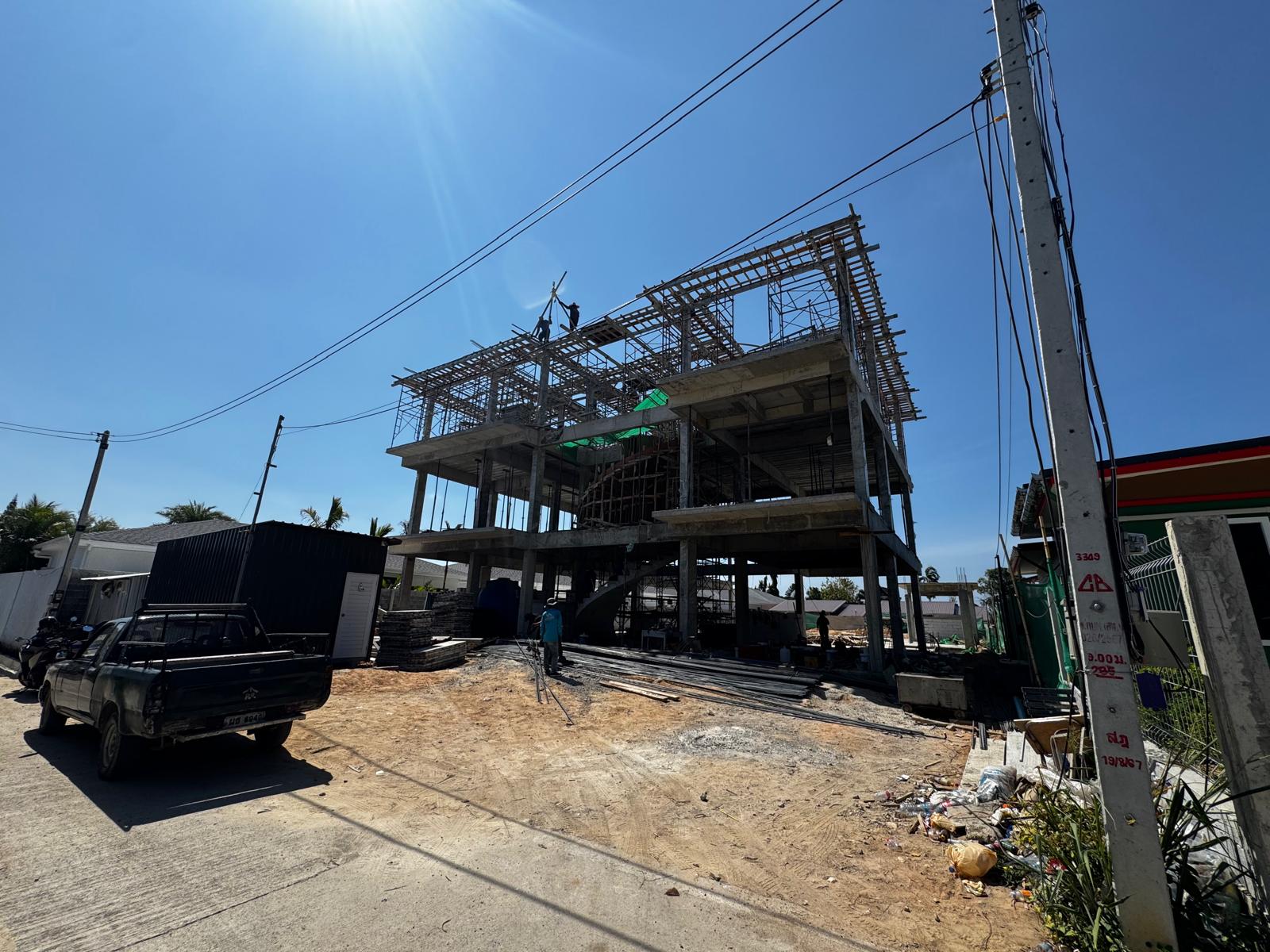
On large projects in Phuket — condominiums, resorts, commercial complexes — a structural flaw appears consistently: the absence of systematic independent validation between the client and the contractor. Billed work goes unverified. Milestones are self-declared. Non-conformities surface late, when the cost of correction has already multiplied.
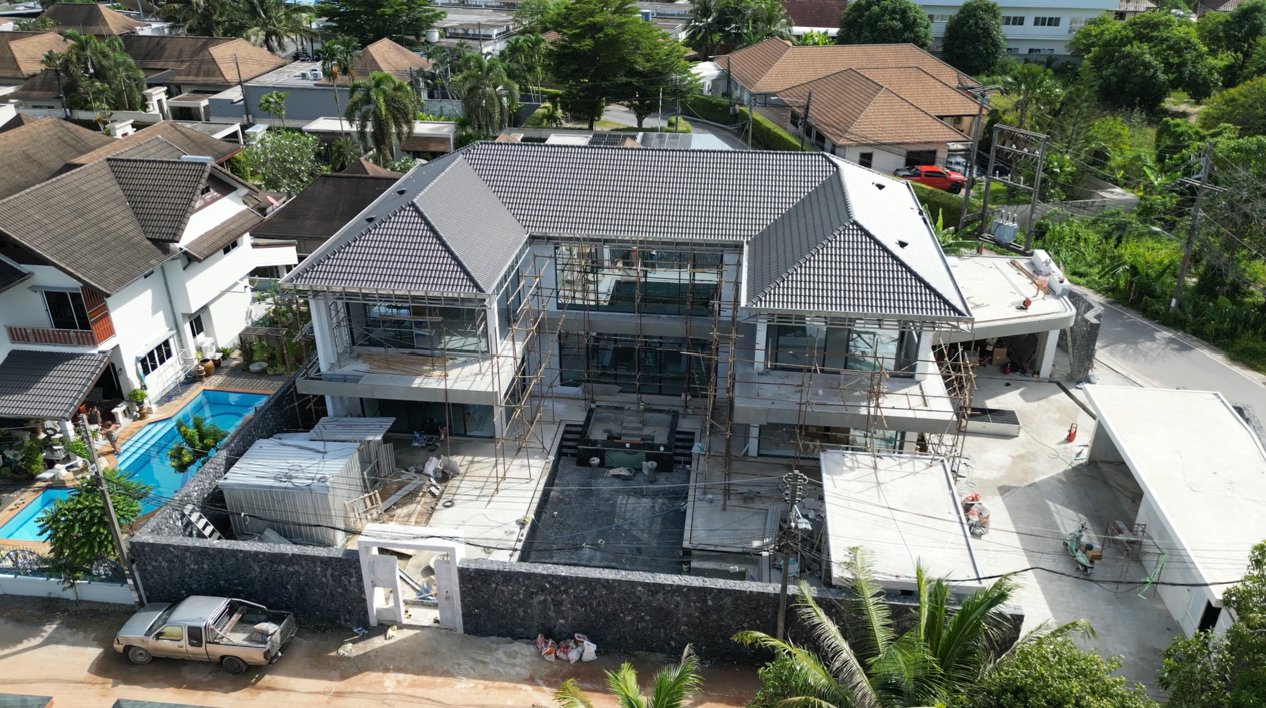
This is precisely what the Owner’s Architect Representative mandate — known in French practice as Assistance à Maîtrise d’Ouvrage (AMO) — is designed to prevent. KZ Architecture provides this service as an independent architect construction supervision Phuket firm, independent of both design and construction. For a detailed breakdown of how supervision works across construction phases, see our article on construction supervision in Phuket.
The 6 Functions of the Owner’s Representative Architect (AMO)
Independent Technical Validation
Each milestone is verified against approved drawings, structural specifications, and the BOQ (Bill of Quantities). Deviations are documented before payment is released — not after.
Payment Milestone Verification
Without independent verification, clients regularly pay for incomplete or non-compliant work. The AMO architect validates each milestone before any payment is signed off.
Regulatory Compliance (OrBorTor, EIA)
Thai authority submissions — building permits, EIA (Environmental Impact Assessment) via ONEP, OrBorTor — require a licensed architect as legal signatory under the Thai Building Control Act. This function cannot be delegated to a contractor.
BOQ Control and Change Order Management
Each change order is reviewed against original specifications, costed, and submitted with a recommendation: approve, negotiate, or reject.
Stakeholder Coordination and Dispute Resolution
On large projects, technical disputes between parties are frequent. A licensed architect provides the documentation and professional standing needed to resolve them before they impact the schedule.
Legal Local Representation
Translation of official documents, attendance at authority meetings, signature of regulatory submissions — the AMO architect is the foreign owner’s official local technical representative for the full project duration.

Case Studies: Owner’s Representative on Phuket Real Estate Developments
Case 01 — Mixed-Use Residential Development, South Phuket
Multi-Phase Condominium, Budget > 600 Million THB
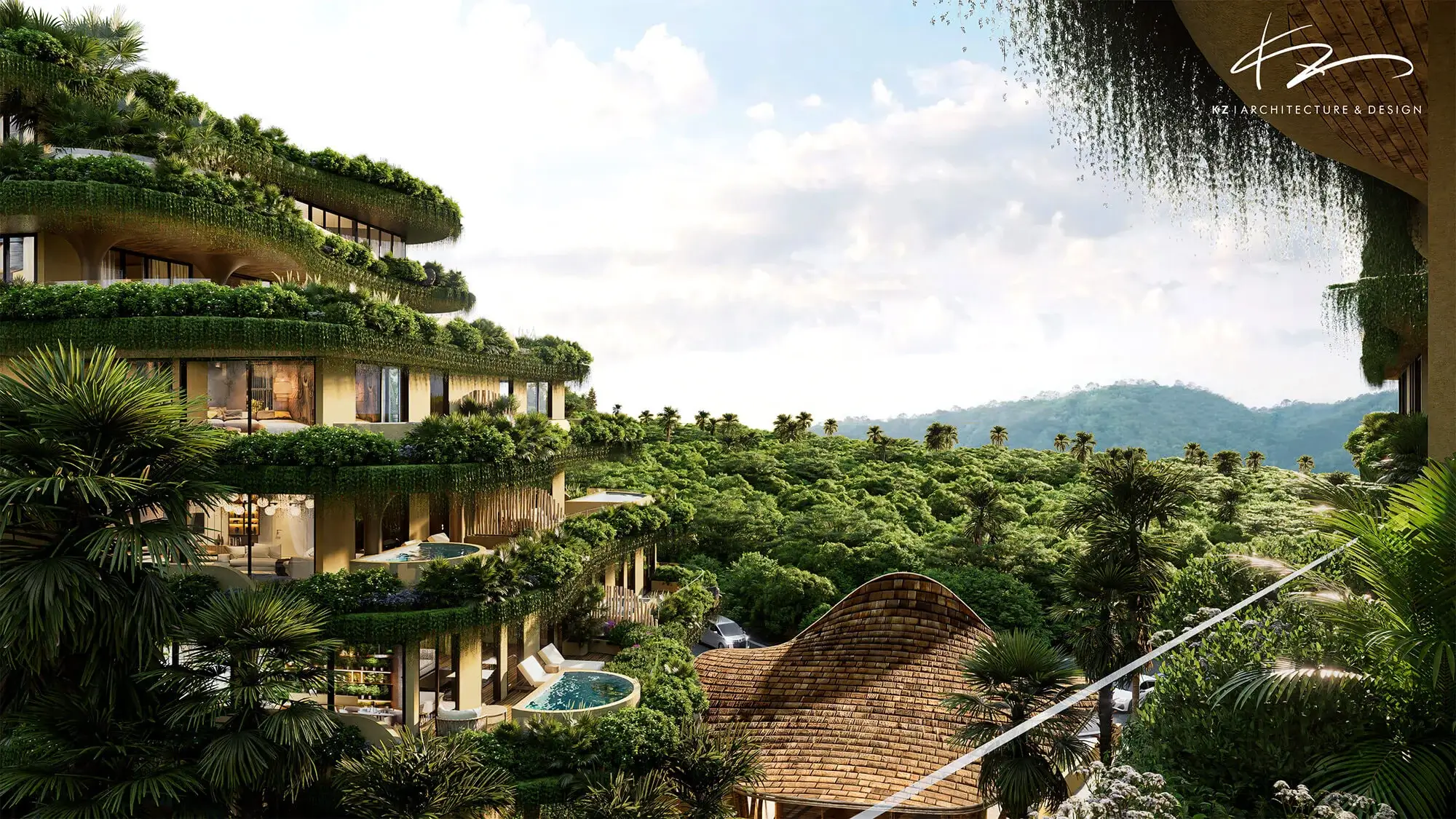
A foreign development group engaged KZ Architecture on a large-scale project in Phuket — several hundred units, phased construction, international financing structure, project director based outside Thailand. The design architect had been selected. Construction documents existed. What was missing: systematic independent milestone validation and a licensed signatory for regulatory submissions throughout construction.
In practice, these are the types of questions an AMO architect asks before approving any design package:
AMO Control Questions — Concept Phase Examples
- —What GFA/NFA ratio (gross floor area / net sellable area) does the architect commit to achieving? A 2% discrepancy on 200+ units directly impacts revenue projections.
- —What earthwork volumes are estimated, and what cut/fill balance strategy is planned? Is a dedicated earthworks phase scheduled before structural construction begins?
- —What exactly does the fee scope cover — site supervision, interior design, landscape? A written list of inclusions and exclusions is required before validation.
- —On what date will the first visuals usable for pre-sales marketing be delivered?
- —How many revision rounds are included per deliverable before additional billing applies?
None of these questions are raised spontaneously by a non-technical client. All of them have a direct impact on budget and schedule.
Case 02 — International Group Entering the Thai Market
Resort Complexes, > 60,000 m² GFA, Two Phuket Sites
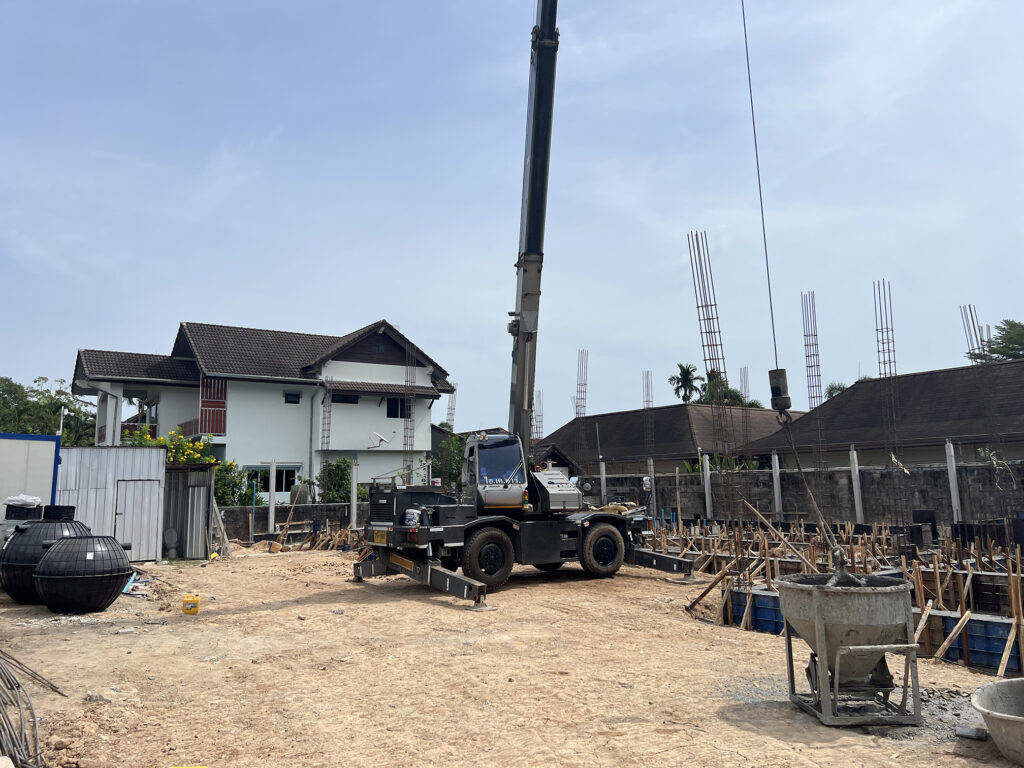
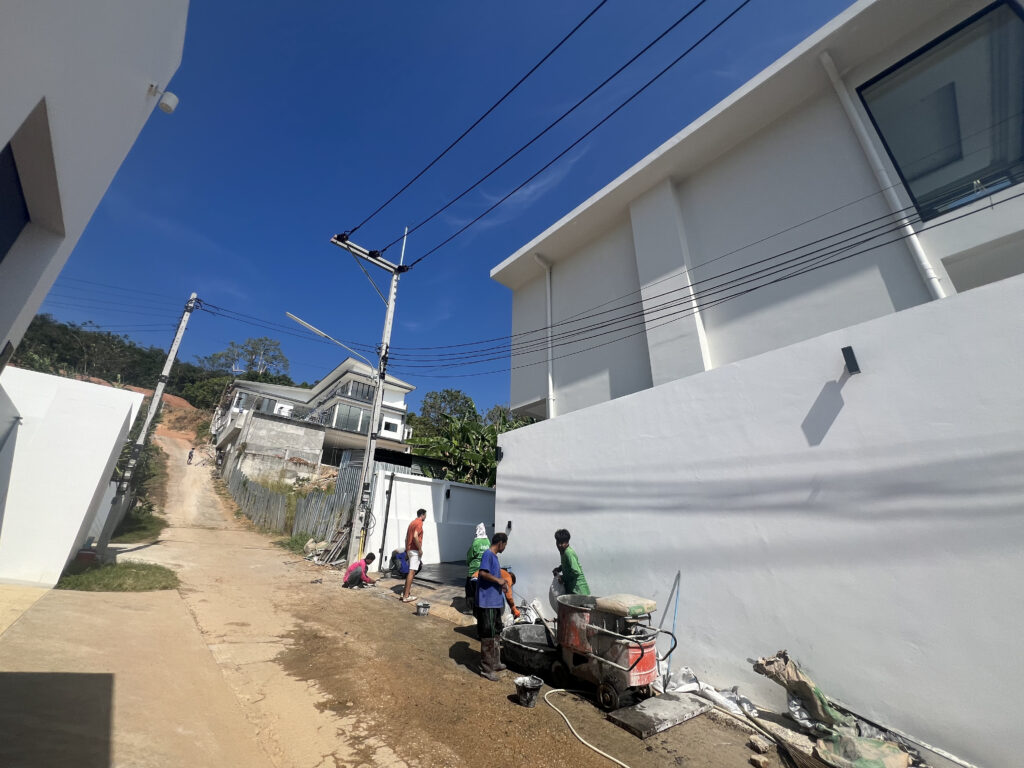
A development group active across multiple Asian markets had identified two resort development sites in Phuket, totalling more than 60,000 m² of gross floor area. The group had its own international design team. What it lacked: a Thai-licensed architecture firm to act as local architect of record — plan compliance with the Thai building code, permit management, liaison with local administrations, and coordination with ONEP for the EIA process.
Thai law is unambiguous: a locally licensed architect must sign all building permit submissions. No foreign firm can substitute for this legal requirement, regardless of its size or international reputation.
The Cultural Gap Nobody Measures — and Everyone Pays For
Foreign developers working in Thailand consistently run into the same problem: not a lack of competence on the Thai side, but a structural communication gap that compounds over time.
“A contractor who says ‘yes’ in a meeting often means ‘I understood the request’ — not ‘I will do it’.”
A permit issue may be known to the local team weeks before it reaches the foreign client. A design change requested by email may be acknowledged without being actioned. This is not bad faith — it is a different professional and cultural operating system. Without someone who navigates both systems fluently, these translation failures accumulate into delays, budget overruns, and disputes that were avoidable.

KZ Architecture operates at this intersection by design. Our founder trained and practiced in France, worked extensively in China, and managed projects across Europe, Southeast Asia, India, and South America, including some of the largest facilities built in Asia. The team combines Thai-licensed architects with international project experience. We conduct client meetings in English and French, read Thai administrative documents, and translate the implicit signals from a Thai construction site into documented decisions the foreign client can act on.
For a Chinese developer accustomed to fast-track timelines and top-down decision structures, we explain why Thai municipal approval processes require patience and relationship management — not escalation. For a European developer expecting exhaustive written documentation at every stage, we extract that documentation from an environment where verbal coordination is the norm. On a 50 million THB project, a three-week delay caused by a miscommunication over a material specification costs more than the annual retainer of an AMO mandate.
AMO Services and Local Architect of Record: What KZ Architecture Provides
KZ Architecture provides owner’s representative architect Phuket mandates and local architect of record services as fully independent engagements — independent of design, independent of construction. When KZ validates a milestone or flags a non-conformity, the only interest served is the client’s. See our full services page for the complete scope of services available.
Large Residential & Commercial Projects
- ·Technical validation and payment milestone control
- ·Independent BOQ review and change order management
- ·Sellable floor area verification (GFA/NFA)
- ·Regulatory submissions and permit management
- ·EIA coordination and ONEP process monitoring
Foreign Companies & International Developers
- ·Local architect of record — full Thai licence
- ·EIA compliance and Thai building code review
- ·Official document translation and authority liaison
- ·Local technical representation — full project duration
- ·Coordination with international design teams
Or monthly retainer for ongoing supervision mandates.
Consistently below the average cost of a single major dispute on this type of project.
Below 20 million THB, a competent contractor and periodic site visits may be sufficient. Above that threshold, regulatory complexity and financial stakes make independent oversight a risk management tool with measurable ROI. On a 100 million THB project, a 10% budget drift represents 10 million THB of avoidable loss. For a detailed breakdown of fee structures, see our article on architecture fees in Phuket.
Related Articles
- → Phuket Construction Supervision: How to Avoid Costly Defects
- → Architecture Fees in Phuket: What You Are Actually Paying For
- → Phuket Villa Construction Timeline: Why 16–18 Months Minimum
- → Condominium Architect Phuket: From Villa to 100+ Units
- → Design & Build in Phuket: Single-Point Architect Responsibility
Regulatory References
What is an owner’s representative architect (AMO) in Phuket?
An independent technical representative acting exclusively in the owner’s interest throughout construction: milestone validation, BOQ control, and regulatory compliance. The AMO architect is neither the designer nor the contractor.
Is a locally licensed architect required for building permits in Thailand?
Yes. The Thai Building Control Act requires a locally licensed architect to sign all building permit submissions. No foreign firm can substitute for this requirement, regardless of its international reputation.
From what budget is an AMO engagement in Phuket justified?
From 20 million THB upward, or whenever the owner is not permanently present on site. Beyond this threshold, Thai regulatory complexity makes independent oversight critical.
What does an AMO engagement cost in Phuket?
Between 0.5% and 2.5% of the construction budget depending on phases covered, or a monthly retainer for ongoing supervision mandates. This amount is consistently below the average cost of a single major unresolved dispute.
Does the AMO replace the design architect?
No. The roles are complementary: the design architect produces drawings and documents; the AMO architect independently verifies that those documents are correctly executed on site. The two roles cannot be held by the same firm.
Planning a large project in Phuket?
Every AMO engagement starts with a rapid project review: construction budget, current phase, owner’s presence on site, and regulatory status. We identify the key risks and recommend the appropriate level of independent oversight — no commitment required.
Request a rapid project assessment
info@kz-archi.com — Response within 24–48 hours.
About the Author
KZ Architecture & Design
- ·Founded by Kaled Kamala, French architect, Paris-Val-de-Seine School of Architecture (2004)
- ·Specialised in architecture and risk reduction since 2008
- ·Based in Phuket since 2020
- ·20 years of international experience, including 12 years in Asia
- ·Licensed architecture firm operating across Thailand
- ·Serving European and international investors building in Phuket and Southeast Asia
Written by Kaled Kamala, Founder of KZ Architecture & Design. French architect graduated from Paris-Val-de-Seine School of Architecture, specialised in architecture and risk reduction since 2008. Based in Phuket since 2020, with 20 years of international experience including 12 years in Asia across Europe, South America, the Caribbean, India and China.