
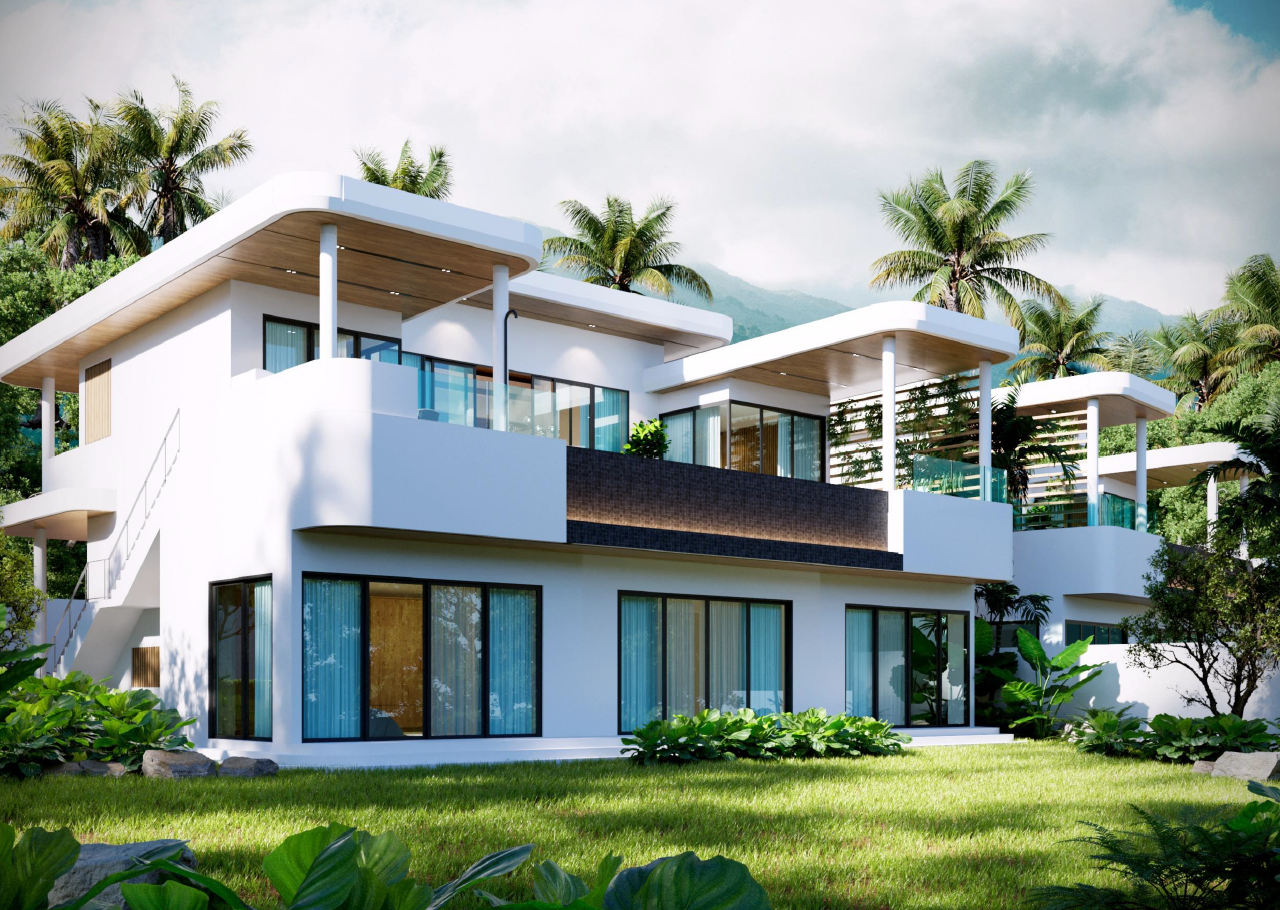
The Low Quote, the Stalled Site, the Trapped Client: Phuket’s Number One Construction Trap
Whether you are building a 10-million-baht villa or renovating an apartment, whether you live in Phuket or manage your project from abroad, whether you are an individual owner, a real estate investor, or a condominium developer—the single most common cause of budget overruns, missed deadlines, and half-finished sites in Phuket is always the same.
It is not the quality of the materials. It is not the weather. It is not the technical complexity of the project.
It is the communication gap between what you want, what the contractor understood, and what actually ends up being built.
In Phuket, this gap has a cost. Usually quantifiable. Always avoidable. This article explains why it happens consistently across all project types—and what a properly structured project process looks like when it is handled correctly: predictable, transparent, and controlled from permit approval through to final delivery.
1. Why Low Quotes Become Expensive
The scene is familiar. You have your project and your budget. You consult several contractors. One comes back with a price 20, 30, or sometimes 40 percent below the others. The temptation is real.
That low price is almost never the result of superior organization or better access to materials. The contractor guessed at your project rather than understanding it. He priced what he interpreted—not what you asked for. Without a detailed bill of quantities and technical specification, every undocumented assumption becomes a potential variation order later.
What This Produces in Practice
Work starts. Within weeks, the first discrepancies emerge: a partition wall in the wrong place, finishes that differ from what was discussed, and a bathroom facing the wrong direction. You raise the issue. The contractor explains it was not in the quote. He submits a variation order. Then another.
By mid-construction, you have often caught up with — and exceeded — the price of the competing quote you rejected. Most construction disputes in Phuket do not originate from structural defects but from undocumented scope changes agreed to verbally and never formalized in writing.
Observed case: a client who signed for a villa at 8.5 million baht found himself, six months later, facing 1.2 million baht in variation orders for items he considered part of the original scope—infinity pool overflow system, perimeter drainage, and acoustic insulation between floors. Nothing had been specified in the contract. Everything had been agreed upon verbally.
The best way to avoid this situation is straightforward: a complete set of execution drawings, a line-by-line bill of quantities, and a payment schedule tied to verified technical milestones. This protects both parties—and it is the starting point on every project managed by KZ Architecture.
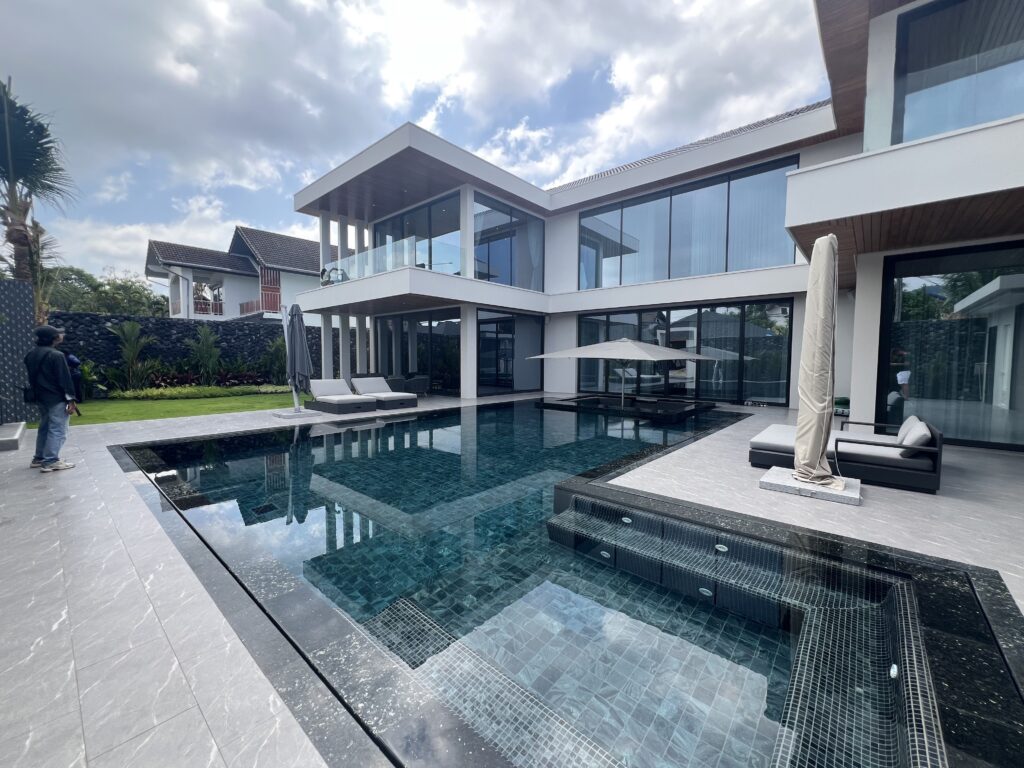
2. The Hidden Cost of Thailand’s “Yes” Culture
There is a cultural reality that every project owner in Phuket needs to understand early: in Thai culture, saying no or admitting a misunderstanding is deeply uncomfortable. “Yes” or “no problem” does not always mean “I understood, and it is doable.” It can mean “I do not want to create conflict” or “I understand you want something — I will do my best.”
This is not bad faith. It is a difference in communication register that generates significant misunderstandings when nobody plays the role of technical translator between the client’s expectations and the site team’s execution. Correcting an MEP coordination issue after finishes are installed can cost 3 to 8 times more than resolving it during the rough-in phase. The cost of a missing translator is rarely visible at the start and always visible at the end.
Three Recurring Situations on Phuket Construction Sites
- The contractor agrees to a verbal modification during a site meeting but does not translate it into a revised drawing. Workers continue on the original plan.
- A technical problem is identified on site. To avoid worrying the client, it is not raised. The solution adopted internally does not match the original specification.
- The contractor considers himself underpaid on a poorly priced item. He quietly slows down and reassigns his teams elsewhere. The client notices delays but does not push, afraid the site will stop entirely.
Observed case: on a 12-unit residential project, the client verbally requested during a site meeting that electrical outlet positions be revised. The site manager acknowledged it. The electricians never received the instruction. The discrepancy was only discovered when partition walls were being installed—at which point the same correction costs approximately three times more than during the structural phase.
3. Why Clients Stop Complaining
There is a particularly common and particularly silent situation: the client who knows something is wrong but does not say it.
The reason is simple: he is afraid the contractor will walk off the site. And that fear is justified. Finding a replacement contractor mid-construction in Phuket is complex, expensive, and potentially the start of a legal dispute. So the client accepts compromises progressively. He convinces himself that “it’s not that bad,” that “it will be fine,” and that “the price was low, so you cannot expect everything.”
Observed case: a villa owner considered himself broadly satisfied with his completed project — until he listed it for short-term rental. The first guests reported roof terrace leaks, an undersized ventilation system, and a pool filtration unit physically inaccessible for routine maintenance. Items that would have cost 120,000 baht to correct during construction. The post-delivery repair bill exceeded 450,000 baht.
The problem was not that the contractor was incompetent. The problem was that nobody was checking, point by point and in writing, that each deliverable matched the original program. At this stage of a project, most problems are still reversible and relatively inexpensive to address. After finishes begin, correction costs increase exponentially.
→ Learn more about how KZ Architecture structures construction supervision to keep projects on track from groundbreaking to handover.
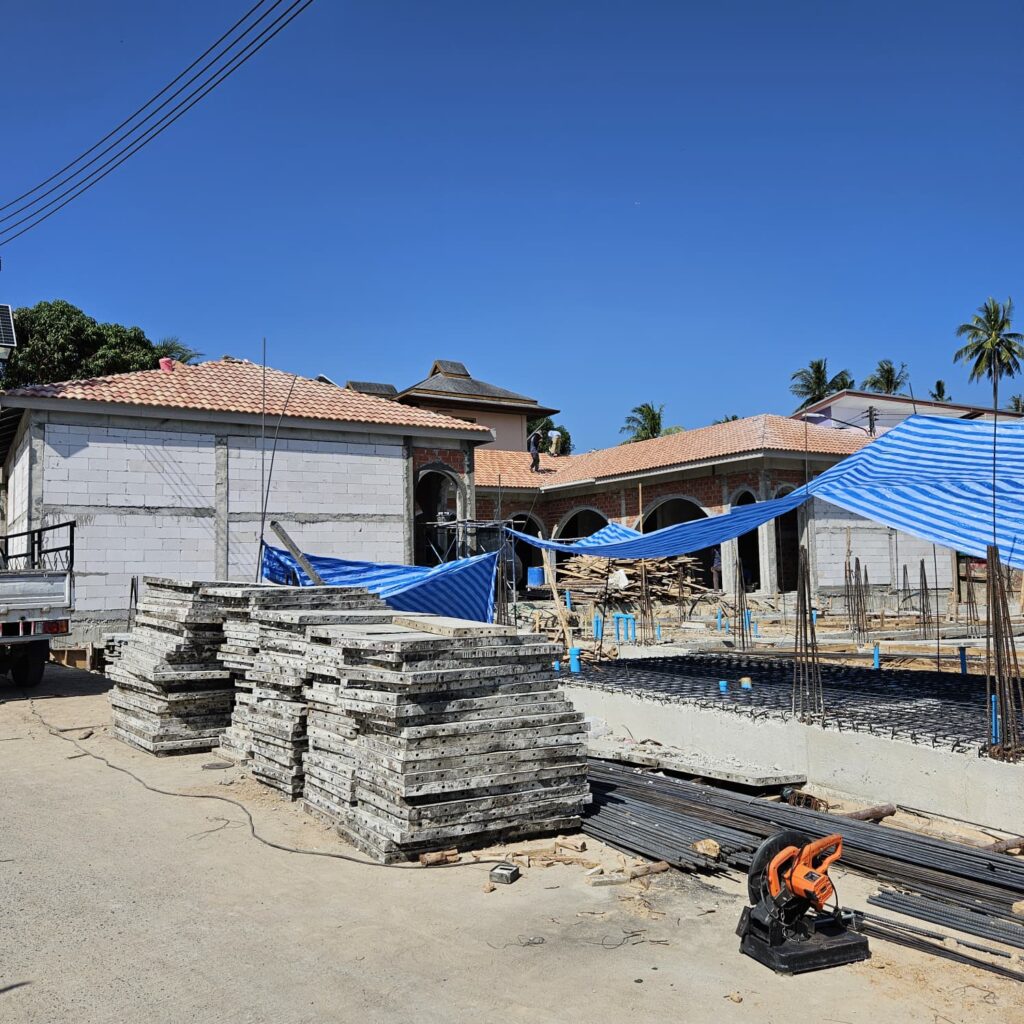
4. What an Independent Architect Actually Does
An independent architect in Thailand is the client’s exclusive technical representative on a construction project—structurally distinct from the contractor and responsible for verifying that the work conforms to the approved documentation at every phase. He has no financial interest in the volume of work carried out, no reason to minimize a problem, and every reason to flag it.
His added value rests on four specific functions.
a) Technical Translation of the Brief
A properly documented brief—execution drawings, detailed technical specifications, and a complete bill of quantities—removes interpretation gaps entirely. The contractor prices and builds exactly what is written. Not what he inferred from a conversation. Clarity on paper prevents conflict on site.
b) Cultural Translation
An architect with years of experience on the Thai market, working alongside local teams, knows how to frame a request so that it is genuinely understood, how to anticipate friction points, and how to obtain an honest technical answer rather than a polite agreement. This fluency — linguistic and cultural — is the practical bridge between a foreign client’s expectations and a Thai construction team’s execution.
c) Payment Schedule Tied to Technical Milestones
This point is consistently underestimated by foreign project owners. A Thai contractor who has received 60 to 70 percent of the contract value in the first two months has little financial incentive to push for completion. The result: slowdowns, reassigned teams, unfinished details.
A properly structured payment schedule—typically staged at approximately 30%, 20%, 15%, 15%, 10%, 5%, and 5%—links each disbursement to a verified, inspected milestone: foundation completion, structural frame, weathertight envelope, MEP rough-in, finishes, and project close-out. No milestone signed off by the architect, no payment released. This mechanism protects the client’s cash position and keeps the contractor financially motivated through to final delivery.
d) Interface With Administrations and Third Parties
Obtaining a building permit in Thailand requires the signature of a licensed architect and, depending on the project scope, the co-signature of a licensed civil engineer and a licensed sanitary engineer. Coordinating these signatures, managing resubmissions following administrative comments, and ensuring that the permitted drawings remain aligned with the work as built — this is a specialist function that cannot be delegated to an unlicensed construction manager.
Phuket-specific regulations add further complexity: zoning restrictions that vary by district, maximum building heights, mandatory setbacks from the coastline and protected forest zones, environmental impact assessment obligations above certain thresholds, and specific geotechnical requirements for hillside plots. A low-cost contractor unfamiliar with these parameters is the primary reason sites get stopped by the authorities mid-construction.
Observed case: a foreign developer supervising the construction of a 24-unit residence in Phuket had directly engaged local contractors without appointing an independent architect. By the fifth week of construction, a non-conformity between the permitted drawings and the work as built triggered an administrative stop order lasting three weeks. KZ Architecture was engaged as consulting architect to regularize the permit file, reestablish the coordination protocol, and reinstate weekly documented site meetings. The site restarted without additional penalties.

5. How Risk Changes by Project Scale
A persistent misconception: an independent architect is justified on large projects but unnecessary for a small renovation or a standard villa. This is incorrect. The return on investment is often strongest on smaller projects, precisely because financial margins are thinner and there is no buffer to absorb errors.
That said, the nature of the risk—and the appropriate level of intervention—changes significantly with scale.
Renovations and Villas (1 to 30 million baht)
The primary pain point at this scale is budget drift through successive variation orders and the quality of finishes. The absence of detailed drawings and documented site supervision translates directly into rework, non-approved material substitutions, and missed deadlines. Even on a 2-million-baht renovation, a single undocumented change request can generate costs that dwarf the architect’s fee.
Residences and Mid-Scale Developments (30 to 150 million baht)
At this scale, coordination complexity increases substantially. Multiple contractors and subcontractors working in parallel require a single technical authority to manage sequencing, resolve interface conflicts, and enforce the inspection hold points that protect the client’s payment releases. The administrative dimension—permit resubmissions, statutory inspections, and coordination with structural and MEP engineers—demands full-time engagement from a qualified professional.
Large Condominiums and Hospitality Projects (150 million baht and above)
For large-scale developments, the risk framework shifts from budget management to financial engineering and legal exposure. A coordination error at this scale does not produce a variation order—it produces a construction stop order, delay penalties, contractor claims, and potential EIA non-conformity. The independent architect functions equally as a risk management layer: ensuring that every phase meets the technical, regulatory, and contractual standards that protect the developer’s investment and the future operating license.
KZ Architecture currently manages projects spanning this entire range, covering architecture, permitting, technical coordination, and construction supervision across private villas, residential developments, and large-scale hospitality projects in Phuket. View the full portfolio.
6. Why Professional Qualification Matters in Phuket
Phuket’s construction market is international and largely unregulated at the advisory level. Many foreign-led construction consultancies in Phuket operate without internationally recognized architectural qualifications or local licensing authority. The consequences for the client are concrete: no professional indemnity insurance, no enforceable liability, and no regulatory recourse if the project goes wrong. An advisor who is not registered with a professional order is also not bound by its code of ethics—which means no formal obligation to act in the client’s exclusive interest.
KZ Architecture & Design is led by a DPLG-qualified architect registered with the Ordre des Architectes in France, with 20 years of international experience, including 12 years in Asia. The firm’s licensed architects include holders of Thai architectural licenses issued by the Architects Council of Thailand (ACT), which is the statutory requirement for signing building permit applications in Thailand.
The team combines specialists in tropical construction, structural coordination, MEP integration, and site management—organized to handle multiple projects of different types and scales simultaneously.
This combination—European technical rigor and professional accountability, fluency in Thai regulatory requirements, and a bilingual local team—is what our clients describe most consistently: not just the technical output, but the peace of mind that comes from working with a firm that knows the market, knows the contractors, and knows exactly what to check at every stage.
Our projects span the full range: renovations, individual villas, upscale residences, hotel and boutique resort projects, and large-scale condominiums. Whether you are based in Phuket, in Europe, or anywhere else, we work with the same documentation standards, the same reporting discipline, and the same point of contact throughout the project. Explore our portfolio.
Frequently Asked Questions for Foreign Owners in Phuket
Do I need an independent architect if my contractor already offers site supervision?
The supervision offered by a contractor protects the contractor’s interests. An independent architect protects yours. The two roles are not interchangeable—and treating them as equivalent is one of the most common and costly assumptions made by foreign project owners in Phuket.
Can KZ Architecture step in on a project that is already underway?
Yes. KZ Architecture regularly intervenes mid-construction—in situations of technical blockage, administrative stop order, or contractual dispute—to resume documentation control and site coordination. A project management assistance mission can start at any phase.
What is the difference between a licensed architect and a project manager in Thailand?
In Thailand, the architectural license is issued by the Architects Council of Thailand (ACT). It is the legal requirement for signing building permit applications and certified construction drawings. A project manager without an ACT license cannot sign these documents and has no statutory authority over the permit process. KZ Architecture holds the licenses required for the full scope of services, from design through delivery.
How does a milestone-based payment schedule protect me as a foreign owner?
A payment schedule tied to verified technical milestones ensures that the contractor remains financially motivated throughout construction. Each payment is conditional on a documented site inspection confirming the corresponding phase has been completed to specification. This is standard practice on all properly managed construction projects in Thailand—and one of the most effective contractual protections available to foreign owners.
I live abroad and cannot visit the site regularly. How does supervision work?
Every site visit produces a structured photo report and written summary distributed within 24 hours. All decisions require your explicit written approval before implementation. You have a single point of contact—French- or English-speaking depending on your preference—available across time zones and responsive throughout the project lifecycle.
Does KZ Architecture work with foreign developers and contractors?
Yes. KZ Architecture also acts as a consulting architect for foreign developers or general contractors who require a technical and administrative interface with Thai authorities, licensed local engineers, and construction trades—for permit management, EIA coordination, and construction compliance monitoring.
What are the main regulatory constraints for construction in Phuket?
Phuket applies zoning restrictions that vary by district, maximum building height limits that differ from mainland regulations, mandatory setbacks from the coastline and protected forest areas, and EIA obligations above certain built thresholds. Hillside plots require geotechnical studies prior to foundation design. Non-compliance at the permit stage is the primary cause of administrative construction stop orders—and the most expensive problem to resolve mid-build.
Conclusion
In Phuket, the quality of a construction project does not hinge primarily on the choice of materials or the accuracy of 3D renders. It hinges on the ability of everyone involved to work from the same documented standards, with the same written expectations, enforced at every milestone.
This work—technical translation, cultural fluency, and contractual rigor—is what makes the difference between a project delivered as specified and a project delivered by default. Done right, construction should feel controlled and transparent, not anxious and reactive.
Before signing with a contractor in Phuket, verify the essentials.
Every construction project in Thailand — at any scale — should be supported by:
- A complete set of execution drawings
- A detailed, line-by-line bill of quantities
- A milestone-based payment schedule tied to verified site inspections
- An independent licensed architect overseeing execution on your behalf
This verification framework alone prevents the majority of budget overruns and site conflicts observed on residential and commercial projects in Phuket.
KZ Architecture & Design assists private owners, investors, and developers at every stage—from feasibility studies and permit coordination through to construction supervision and project delivery.
Contact us:
📧 info@kz-archi.com
🌐 www.kz-archi.com
📞 +66 (0)9 24 61 81 76 (English / French)
📞 +66 (0)8 40 60 07 49 (English / Thai)